
Something Good #118: A Pink Laser to the Brain
"The winners aren’t always the strongest, the smartest or even the most popular."


A passing interest in early Christianity can be dated to when 13-year-old me discovered Philip K. Dick’s novel VALIS on an exchange trip to France. I have vivid memories of reading Dick’s autobiographical science fiction novel on a beach in Normandy, while I lay atop an inflatable mattress that rested on a beach of round, grapefruit-sized stones.
Inspired by an episode Dick had in which he believed an alien intelligence fired a pink laser beam of divine knowledge into his brain from somewhere in space, VALIS was an unexpected backdoor into a strangely obscure chapter of theological history. One of the book’s animating fixations is that “the Empire Never Ended”—that everything that’s occurred over the last, I don’t know, 18 centuries or so is an illusion and that we’re all still living as a band of repressed early Christians in the days of the Roman Empire. (At least on a metaphorical level, the idea definitely has merit.)
The book’s theological explorations take in the ideas of that era, specifically Gnosticism, which, with its alluringly Eastern philosophical tinge, sparked a low-level fascination in me. Thought for a long time to have competed with more familiar Christian beliefs in those early days, Gnosticism is said to purport that the universe itself is a sort of lie created by a demonic “demiurge,” and that we all carry sparks of a shattered divine “godhead” in ourselves. To become one with the divine, the Gnostics maintained, we need to transcend the base prison of physical reality. This was all very intriguing to a teenager just learning about Buddhism, mostly from J.D. Salinger’s Glass stories.
Recently I’ve been reading After Jesus Before Christianity (2021), a fascinating exploration of that period by Bernard Brandon Scott, Erin Vearncombe, and Hal Taussig and originating in the Westar Institute. This is a non-profit that since the 1980s has brought together scholars to examine the record around early Christianity in a more rigorously historical framework, making them unpopular with many in various religious establishments).1
While I guess I most identify as agnostic-Jewish, I find all this stuff fascinating, especially in light of recently (as in, the 1940s) discovered texts that present alternate stories of Jesus’s life and sayings, contesting the authority, historical or otherwise, of the New Testament as we know it. There are whole worlds of alternate gospels beyond the canonized Matthew, Mark, Luke and John, many with enticing alternate takes. In the Gospel of Thomas, Jesus says: “If you bring forth what is within you, what you bring forth will save you. If you do not bring forth what is within you, what you do not bring forth will destroy you." Extremely Gnostic, certainly an influence on Dick, who cites in Valis the Nag Hammadi texts where Thomas was found, and one of those bits of religious wisdom that will roll around in your head for long after you hear it, no matter what you believe. In Hypostasis of the Archons (what an insane title), the Old Testament as we know it is flipped on its head and a corrupt assemblage of immortals are responsible for creating Adam and Eve and for Noah’s flood, and must be defeated for humanity to be redeemed. And so on.
The scientific methodology of After Jesus Before Christianity challenges the “master narrative” of Christian history written, as it were, by the victors. It starts with first principles, looking forward from the distant path, rather than looking back and trying to connect the dots to the present day. This re-contextualization is at the very least, a fascinating intellectual exercise.2
According to the authors, and very much to Philip K. Dick’s point, it’s impossible to understand the origins of Christianity without placing them in the context of the deeply repressive Roman empire in which the faith was born. (An empire that ironically, the religious establishment came to emulate more and more over the centuries.) Placing it in the context of imperial aggression and the violent subjugation of millions of people, takes the stories of martyrdom and rebellion out of the context of metaphor. “The goal was to make sense of the ongoing violence of the Roman Empire in the face of no realistic hope,” the authors write of the second-century Letter of Peter to Phillip (also discovered in the 1940s), suggesting bleakly that for some, the early faith was a sort of support group for people who knew they were inevitably going to be crucified themselves. And not long after Jesus comes the destruction of the Temple in 70 AD, which looms over all of this, a truly apocalyptic event that challenged everything about Israelite identity at the time, and which still seems horribly alive today.
The book describes a world of disparate groups of “Jesus people,” loose, local organizations and eating clubs in which believers found solace and comity. These groups were more often than not led by women, and they were often experiments in familial and social organization, bucking against the rigid hierarchies of Roman society at the time. Names like Chloe and Thecia stand out, woman leaders of these early groups, before later churchmen claimed the power exclusively for their own gender. This had precedent, too—in the Gospel of Mary, discovered in 1896, a woman named Mary (possibly Magdalene), is a visionary who leads the apostles in discussion and contemplation.
Members of these groups would never identify themselves as “Christian,” a word that barely existed in the first two hundred or so years after the crucifixion. One of the most eye-opening elements of this book is how it un-picks the translations of various terms and ideas that bring with them so much baggage that the vocabulary we use alone obscures the historical record. What we call “Christian” more properly meant, in Greek, “of the party of the anointed one,” suggesting an affiliation rather than an inimical identity. (“Christ” itself refers to this anointing, a privilege of priests and kings, not necessarily a marker of godhood.) “Disciple” could probably more accurately be translated as “student.” “Heresy” had no pejorative meaning but meant something neutral like “teaching.” “John the Baptist” was more likely known as something like “John the Bather.” The idea of “communion,” the wafer and wine, is a distant echo of the social elements of these Jesus clubs, which were organized around communal meals.
The authors even question the existence of “Gnosticism” itself, particularly the idea of it as a separate movement adversarial to early Christianity. Was it a movement of its own, or a conveniently retconned adversarial faction used to eliminate competing interpretations? Was Paul the Apostle even as big a deal as later authorities made him out to be? They make a pretty strong case that this most important of the apostles was more of a figurehead than a breakthrough religious thinker, rediscovered, tidied up and celebrated a century after his death. And they examine the centuries of thought and debate over which Jesus metamorphosed from a teacher to a prophet to a God—a process the Romans, who deified their Caesars, would have been intimately familiar with.
So why do I, from a Jewish background, not a person of faith, care about any of this? Isn’t this like becoming fascinated with the history of a sports team from a neighbouring city? For one, it’s a good story, or rather, a lot of good stories, and better than that, secret histories, forbidden or forgotten knowledge (or both), the most enticing kind. It is no wonder that it intersected with my interest in Philip K. Dick and sci-fi, because it kind of is sci-fi.
But more than that, it’s the power of the counterfactual: you don’t have to be anywhere near a believer to recognize how much of our world has been shaped by Christianity, and the idea that there were these dozens if not hundreds of competing theologies and ideas that could have won out and changed everything over the last two thousand years makes me light-headed and giddy.
Recently I’ve been reading histories of the French Revolution and the Russian Revolution, and what I can’t get over is how not pre-ordained any of this stuff seems, how any other factions, the Mensheviks, the Girondins, whoever, could easily have taken control if things had shaken out just a little bit differently. The winners aren’t always the strongest, the smartest or even the most popular. History is so powered by random chance, by unpredictable incidents, that the more you look into its unknowably complex depths the more you realize that really, anything could have happened. And anything probably will.
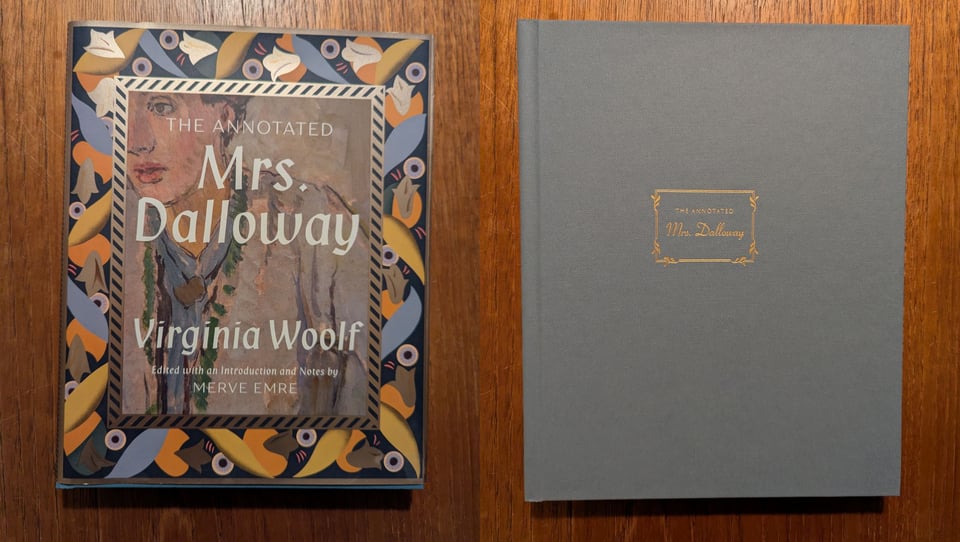
This week’s #nojacketsrequired courtesy of friend-of-the-newsletter Sarah Gibson. As usual—send me your finds and I will “publish” them in this very space.
Bonus track:3
This is the first Something Good of 2026. More to come soon. Thank you for reading. I have a lot to catch up on, I’ve been busy. Next week I’ll be giving two talks at GDC in San Francisco. The big one is called “Nobody Reads Anything” and it’s on Thursday, March 12 at 10:30AM at Moscone if you have a pass. If you don’t, they’re really expensive, so don’t bother, but if you’re around, give me a shout. Otherwise, if you want to subscribe to this newsletter please do so below and if you’re already subscribed please tell a friend and tell them I don’t always write about Christian theology.
Subscribe now
Their first major project, attended by of all people, director Paul Verhoeven, identified which statements were most likely to have been spoken by the historical Jesus. The subsequent publication was credited to “Funk, Hoover and the Jesus Seminar,” which sounds like a cool ‘70s gospel act. ↩
Extra points to the authors for citing, to my surprised delight, one of my favourite short stories ever, Ursula K. LeGuin’s “The Author of the Acacia Seeds and Other Extracts from the Journal of the Association of Therolinguistics.” ↩
Gavin Bryars: “In 1971, when I lived in London, I was working with a friend, Alan Power, on a film about people living rough in the area around Elephant and Castle and Waterloo Station. In the course of being filmed, some people broke into drunken song—sometimes bits of opera, sometimes sentimental ballads—and one, who in fact did not drink, sang a religious song, ‘Jesus' Blood Never Failed Me Yet.’ This was not ultimately used in the film and I was given all the unused sections of tape, including this one. When I played it at home, I found that his singing was in tune with my piano, and I improvised a simple accompaniment. I noticed, too, that the first section of the song—13 bars in length—formed an effective loop which repeated in a slightly unpredictable way. I took the tape loop to Leicester, where I was working in the Fine Art Department, and copied the loop onto a continuous reel of tape, thinking about perhaps adding an orchestrated accompaniment to this. The door of the recording room opened on to one of the large painting studios and I left the tape copying, with the door open, while I went to have a cup of coffee. When I came back I found the normally lively room unnaturally subdued. People were moving about much more slowly than usual and a few were sitting alone, quietly weeping. I was puzzled until I realised that the tape was still playing and that they had been overcome by the old man's singing. This convinced me of the emotional power of the music and of the possibilities offered by adding a simple, though gradually evolving, orchestral accompaniment that respected the homeless man's nobility and simple faith. Although he died before he could hear what I had done with his singing, the piece remains as an eloquent, but understated testimony to his spirit and optimism.” ↩
Add a comment: