
Something Good #126: Murder, He Read
“He had the mind of a thriller writer: obsessive, guilt-ridden, preoccupied with trivia. He had lived too long with thoughts of death.”

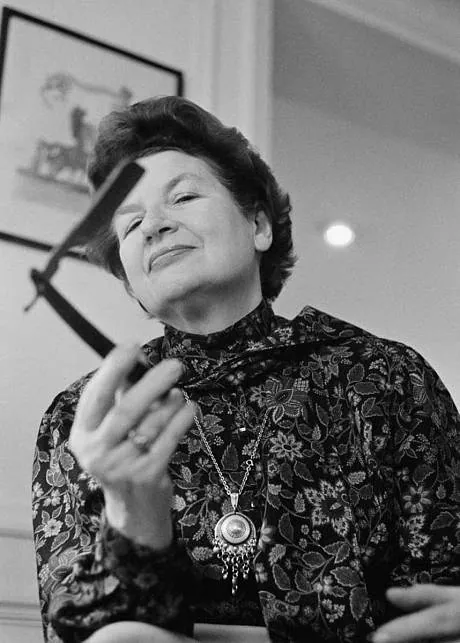
I never thought I was an audiobook person, but this summer I got sick of listening to podcasts full of people yammering away about nonsense, so I used the (excellent) Libby library app to dip into P.D. James’ detective novel Death in Holy Orders, my first real book-on-tape experience.
I had never read James before, but I’ve been on a bit of a mystery kick, and I was soon entranced by this story of murder at a theological college on the Suffolk coast. I quickly realized I was both very much an audiobook person and a P.D. James person, and I’ve listened to or text-read1 something like eight of her books in the last three months alone (and probably more once you read this).
I think I enjoy the wind-up of mystery novels more than the solution to the puzzle itself. I’m terrible at guessing the identity of the murderer, even with “fair play” novelists who reveal enough information for amateur sleuths to play along. I like the table-setting, the gradually rising tension, the sense of being in the middle of a puzzle rather than the pleasure of solving it myself.
And especially so with James, who is an incredible, detached observer of the miserable and the sardonic, and how they are digested by the impersonal systems around them. (She worked in government up to her retirement, and it shows.) Her unsparing autopsies of her characters’ inner lives reminds me of Nabokov’s response to an interviewer, “My characters cringe as I come near with my whip. I have seen a whole avenue of imagined trees losing their leaves at the threat of my passage.”
“It had been an unremarkable face, even in life, and death had given it nothing but a pitiful vacuity,” she writes of one of her murder victims. Those victims, their killers, and their unhappy cohorts of fellow suspects brim with resentments, shiver by their meagre two-bar electric fires, wallow in their misspent lives.
You could call her misanthropic, but a better description, I think, would be merciless. She is too sensitive to her characters’ frailties, their private heartbreaks and suppressed disappointments, to lack empathy, and she never indulges in judgment—who needs it in the face of that unblinking gaze? She never shies away from describing violence, and in one notable sequence from Innocent Blood, recollects a murder from the point of view of two killers in which the true horror is not found in the physical details, but the clarity of their understanding of their own damnation.
(Knowing that she was a devout Anglican adds a whole other layer to her moral universe. You get the sense that she left the judgment to God, but the question of morality in a modern, industrialized world is always present. Even for her characters who are members of the clergy, the divine seems very far away.)
I came to really relish her descriptions of places and things, which are patient and meticulous, never missing a detail, generous with metaphor. Chosen almost at random, from Innocent Blood:
There was a pub at the end [of the street], the Grenadier, with a swinging sign of some splendour, then a betting shop, secretive behind painted glass, giving out a low murmur like a hive of angry bees. Then came a hairdresser’s, the front of his window strewn with advertisements for hair tonics and lotions, and the back occupied by four dummy heads. The blank dolls’ eyes turned upward in the gaping sockets, and the wigs, dry as straw, gave the heads the look of guillotine victims of some ancient holocaust, needing only a jagged red line around each severed neck to complete the illusion.
The way that builds, to the first climax of the “angry bees” behind the betting shop window, then to the truly intricate grand guignol image of the slain mannequin heads is masterful, unexpected, and very funny. And she could be funny. In Shroud for a Nightingale, a cocky young police sergeant recalls the older woman who had initiated him into sex. I actually chortled out loud at narrator Penelope Dellaporta’s dry delivery of a sentence that just got better with every word: “She had been a randy blonde, ten years older than himself, with a dull bank manager husband whom it had been a positive duty to cuckold.”
Where to start? Of her 19 novels, 14 revolve around the brooding, poetry-writing Commander Adam Dalgliesh, and two others, which feature a young female detective, Cordelia Gray (I wish she had written more of these), feature Dalgliesh in a supporting role. I’d start there, although I do think they get better as she goes on, so maybe just do what I did and start with a later volume and then work your way forward from the beginning if you like it. (The mysteries are self-contained, but there are gradually evolving background characters and Dalgliesh’s own subtle progression as a man and as a detective that are a pleasure to experience).
She also wrote a murder mystery sequel to Pride and Prejudice, Death Comes to Pemberley, which I was about to say was a predecessor to the whole Pride and Prejudice and Zombies thing, but on checking, was actually written in 2011. Crazy. And Children of Men, her only science fiction novel, was adapted into one of my favourite movies of the century. I understand it’s quite different in tone and preoccupation from the Alfonso Cuarón film, but I’m nonetheless saving that one for last.
She died in 2014, at the age of 94. Writers often appeared in her books, even mystery writers, and she never spared herself or her tribe either. “He had the mind of a thriller writer: obsessive, guilt-ridden, preoccupied with trivia. He had lived too long with thoughts of death.”
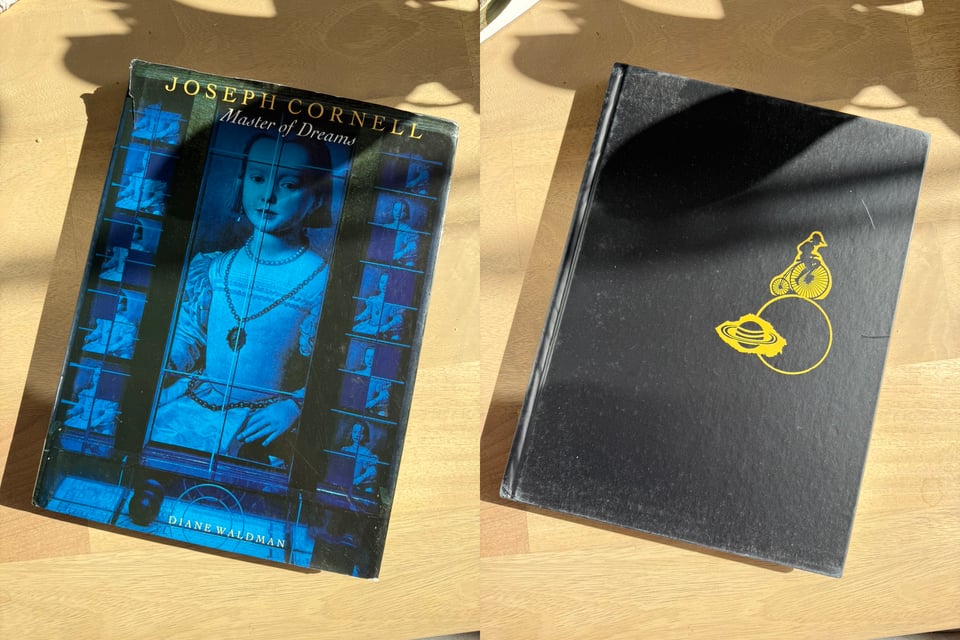
This week’s #nojacketsrequired comes via longtime friend of the newsletter Heather Lou. And it’s a treat! Send me yours at slutsky.mark@gmail.com.
Bonus track:
Per Wikipedia:
Actress Angela Lansbury (who starred in the TV series after which the song was named), after hearing the song finally in 2019 at the age of 93 commented “Oh, reggae! Oh, I'm thrilled to be part of reggae. Of course.”
This is, was, and continues to be, Something Good. Like it? Subscribe, tell a friend, etc. You can do it below.
Subscribe now
Is there a right way to say this? “Visually read”? I want to acknowledge that listening to books is equivalent to reading them, and that science supports this. ↩
Add a comment: