
Something Good #120: Abstract Play
“The ability to play chess is the sign of a gentleman, and the ability to play chess well is the sign of a wasted life.”

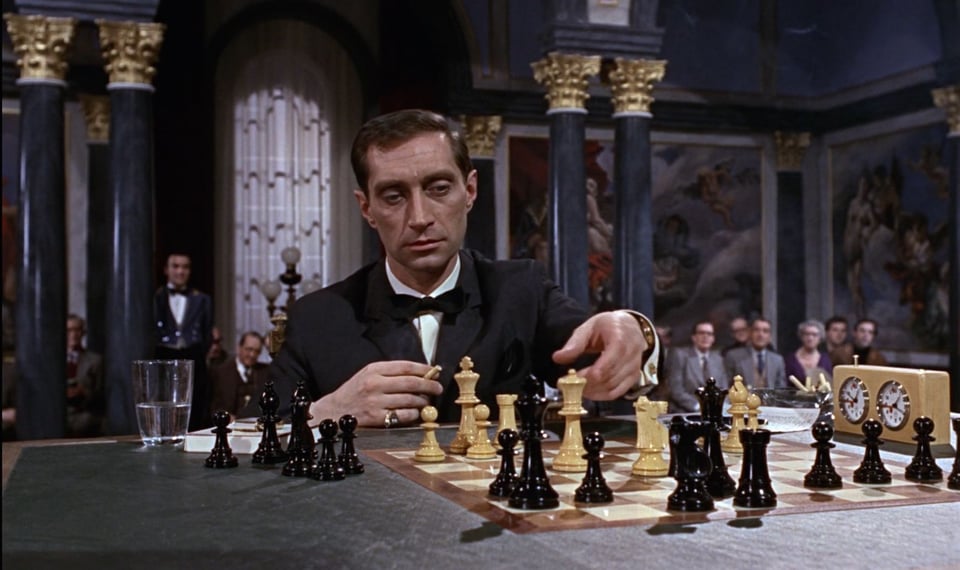
Chess is what is called, in the gaming world, an “abstract game,” a term usually used to refer to two-player games with thin or no theming, little or no luck (dice rolls, card deals, wheel spins), and no hidden information.1 And yet, despite its lack of functional narrative or emotional elements, it’s an irredeemably human game, driven by huge and volatile personalities, a vessel, at least in the Cold War, for the the ambitions of entire empires.
Though only a rough approximation of any kind of lived experience, we still reach for chess terminology (“pawn,” “checkmate,” “4D chess”) to explain our messy human lives. Artists and writers, from Nabokov to Sally Rooney to the Wu-Tang Clan, can’t stay away from chess; Marcel Duchamp retired from art at the height of his notoriety to focus almost exclusively on the game for the next 45 years of his life.
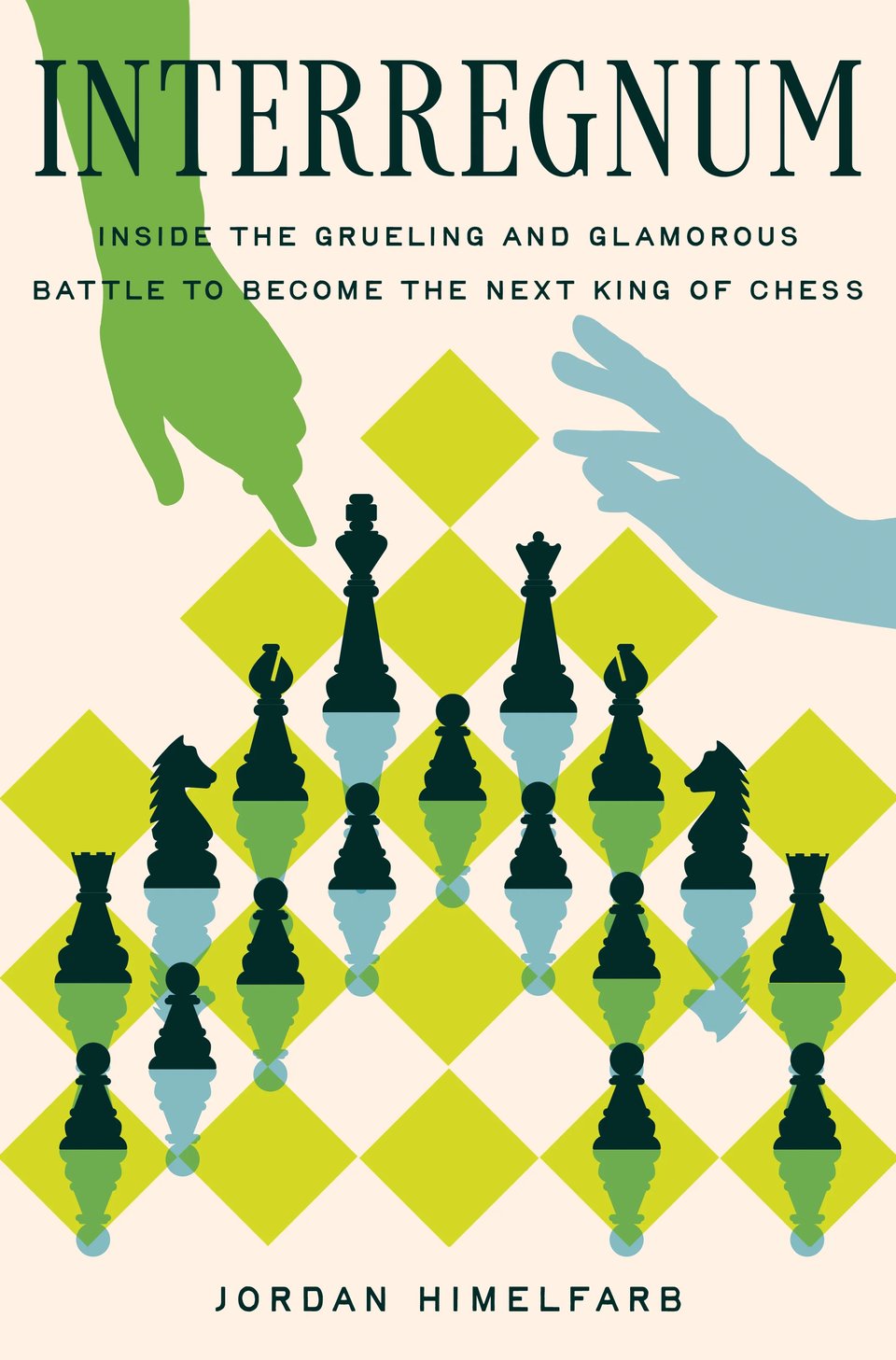
Reading Toronto journalist Jordan Himelfarb’s new book Interregnum: Inside the Gruelling and Glamorous Battle to Become the Next King of Chess, I started to see just how deeply a player’s character can express itself through this supposedly abstract game. The book is a fascinating account of the season leading up to the 2024 World Chess Championship, a season of uncertainty that followed from reigning champ Magnus Carlsen’s decision to effectively abdicate his throne the year before. Himelfarb brings the competing grandmasters to life with swift and vivid character sketches and describes both their games, and their lonely and often tortured lives, with sympathy and precision.
I never fully locked into chess myself (I am an impatient, impulsive player, never capable of thinking several steps ahead), but I was happy to find myself easily following along. Himelfarb’s portraits of the characters, from millionaire streamer Hikara Nakamura to “positional virtuoso” Vidit Gujrathi to “dark horse of Baku” Nijit Abasov, both of their struggles and their styles of play, drew me in. And their stories gave me a question for the author, which led to the conversation below.
Reading your book made me think about how much chess is a personality-driven game. I wanted to know if there was one player from history you would choose to play against.
Can I give you a couple of runners-up first? I think Paul Morphy is a fascinating character. He flourished in the mid-19th-Century; he was an American from New Orleans at a time when chess was totally dominated by Europeans. He didn't really have very high-quality competition where he was from, but he went on a trip to Europe and proved himself to be the best player in the world. And then he returned home and essentially retired from chess and became a lawyer.
He was such a natural talent—and a wit. He’s remembered for saying, “The ability to play chess is the sign of a gentleman, and the ability to play chess well is the sign of a wasted life.” And so he quit chess.
But I'm not going to pick him because he became quite paranoid and irascible, and so I worry that would go wrong.
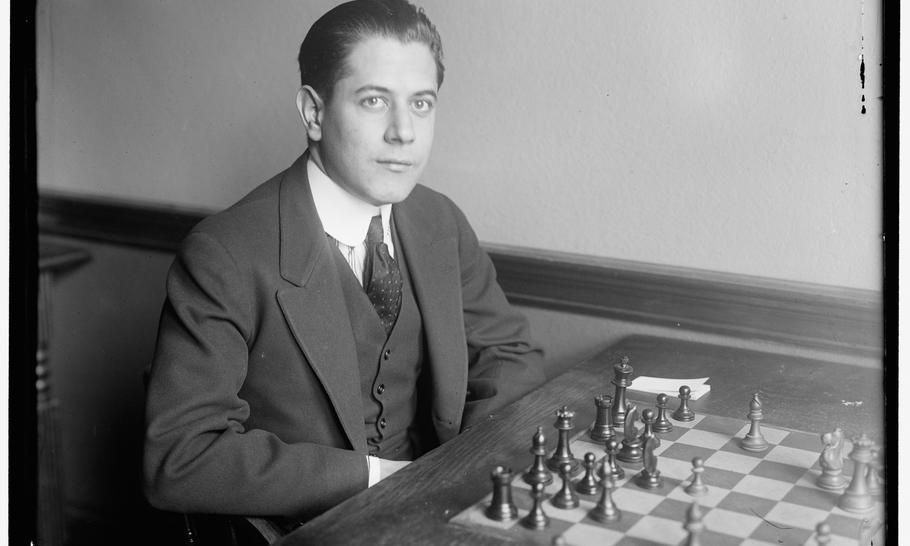
The second runner-up is Jose Raul Capablanca, who was world champion in the 1920s, a Cuban who spent some years in America. Another truly natural talent, when he was four years old, he was watching a game his father was playing and he pointed out an illegal move. He was totally dominant in the ‘20s, didn't lose a game for years. And something that recommends him is that he was quite lazy, because of his natural talent. He didn't need to work as hard as his opponents. That's a good thing for our purposes, because you also want an interesting interlocutor.
Right, if you’re going to choose just one player, you might as well be able to carry on a conversation with them.
One of the things that I learned while writing this book is that almost all the best chess players in the world are mono-focused on chess. There's a part in the book where they're playing an important tournament in Toronto, and someone organizes a yacht to go out into Lake Ontario and look at the total eclipse.
They invite all the top grandmasters who are playing, and only one shows up. The others say, things like, you know, “I Googled it,” or “It’s just not my thing.”
The Indian teenager, Rameshbabu Praggnanandhaa, did say, “I did notice it got darker.”
Didn’t one of them say something like, “Well, Toronto isn’t even in the path of totality?”
“It’s like, 98.9%.” Classic chess player.
So, you know, as I think about who I would to sit across the board from, it would be nice to have a lazier player who might have broader interests. But I think the one I would pick is Boris Spassky, who is best remembered today for having lost the world championship in the Cold War proxy battle against Bobby Fischer in 1972 in Reykjavik. In the chess world he’s remembered for his great skill as a player, but also for being a tremendously warm, funny guy.
One thing that compelled me about this project is that I think that chess is going through an extraordinary cultural moment. Spassky, of course, had a front row seat to the last great cultural moment that chess experienced, which was this kind of Cold War battle and the remarkable figure of Bobby Fischer and what he represented in the United States. Fischer himself was a conspiracy theorist and an anti-Semite, and so I won't pick him, but but Spassky would be a totally interesting guy to play chess with and talk about it.
I should say that any of those players would completely destroy me. I'm not sure how much fun they would have, but it would be fun for me!
Speaking of the Cold War, I was fascinated by how you described Baku, the capital of Azerbaijan, as this sort of city of chess, and how in the former Soviet republics, chess is still this incredibly important part of life.
I knew that for much of the 20th Century the Soviet Union was the dominant chess force and the center of chess greatness. But I didn’t understand how culturally important chess remains in many former Soviet countries, including Azerbaijan, and its neighbour and rival, Armenia, in particular.
When you walk down the streets of Baku, you’re seeing a chess academy on every street. There was an important tournament that I covered there, and there were kids from chess academies watching the games and trying to sort of play them out on boards and make predictions. This was not what we were seeing, for instance, in Toronto, which like a lot of places is experiencing a chess boom, a real spike in interest, but doesn’t have the kind of rich chess culture and roots that the former Soviet countries have.
You write about chess and its styles of play so well. How long have you been a chess player yourself? When did it come into your life?
I’m actually relatively new to chess, in the sense that I was a casual player up until the pandemic, when I watched The Queen’s Gambit on Netflix. Like a lot of people—more than 100 million—I went on to sign up for chess.com and started playing.
I am a great lover of games. I was a tournament Scrabble player when I was younger and my wife and I are competitive bridge players. But I was only a casual chess player until the pandemic. I’m not a great player by any means, but I played a lot and became quite obsessive and then started watching.
I found it to be a surprisingly compelling spectator sport. I wanted to learn more about the lives of these players, but I looked around for a popular account and I couldn’t find one. I thought this would be a fun project for me, and that’s what led to the book.
I loved your descriptions of how the different competitors play, their particular styles, even though I’m not sure I always really understood the invisible forces at play.
There are, broadly, two styles in chess. I think that which one a particular player falls into is as sort of dispositional as much as anything. There’s the swashbuckling approach to the game, where you’re trying to just destroy your opponent. You’re throwing pieces and sacrificing pieces; these are often very beautiful maneuvers. That was the dominant mode of play for people like Paul Morphy in the 19th Century, and is often called the “romantic” style.
Sort of a Napoleonic war, cavalry charge, kind of thing.
Exactly, exactly. And then in the late 19th and early 20th Century, there’s what’s called the “positional” style, which is slower, more about maneuvering and slowly improving the position of each of your pieces so that eventually tactical opportunities present themselves. Eventually this became the more dominant mode of play.
I would say now, top grandmasters have to be what’s called a “universal,” which is a combination of both. But often, many in their youth tend towards one or the other styles, and have to work very hard to develop the other one.
Did researching this book and writing it make you want to play more chess? Are you more into it than you were before, or do you need some space from chess?
No, it made me want to play more.
I wanted this book to be for a general audience, including people who were total chess neophytes. At the same time, part of what makes this world compelling are the intrinsic qualities of chess, the drama and the beauty that are unique to chess. And so I wanted to capture enough that it was truly a chess story that a grandmaster could say that I’d written accurate depictions of the games, but that the person who knows nothing about chess could just feel it without having to think about it.
It’s almost like writing about science for a general audience.
Yes, exactly. As I watched these incredible players play these high-stakes games, there were these moments of intense drama, but also just beautiful play. When it mattered most, they found these incredible ideas. As I player I found that inspiring. I wanted to get to the board and do my pale imitation of that.
Interregnum: Inside the Gruelling and Glamorous Battle to Become the Next King of Chess, published by House of Anansi, is in bookstores now.

This month’s #nojacketsrequired was discovered on my aunt’s bookshelf. (I believe this is a rerun, but it fits the topic so well I’m running it again). Please send your de-jacketed-discoveries in reply to this email or directly to somethinggood@markslutsky.com!
Bonus track:
Over at Compulsion, we won a Peabody and a BAFTA. I’m proud!
This was Something Good. If you enjoyed what you read here, please sign up below or tell a friend.
Subscribe now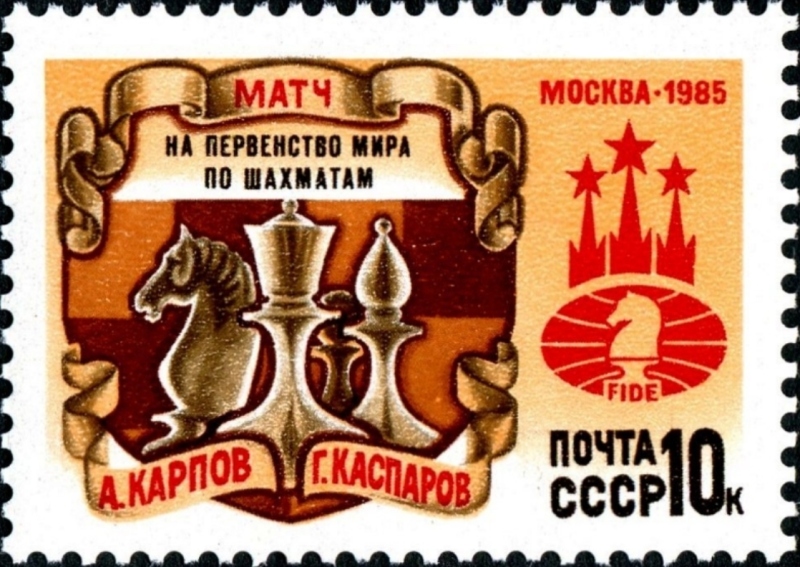
More specifically, chess is a “perfect information game”—the board state alone contains everything you need to know about the state of play. There is no element of chance. The only hidden impossible-to-predict information exists in the mind of your opponent. ↩
Add a comment: