
Something Good #123: A Hero for Our Time
A conversation with Dr. Amanda Cockburn about The Odyssey, morals, monsters, and meat.

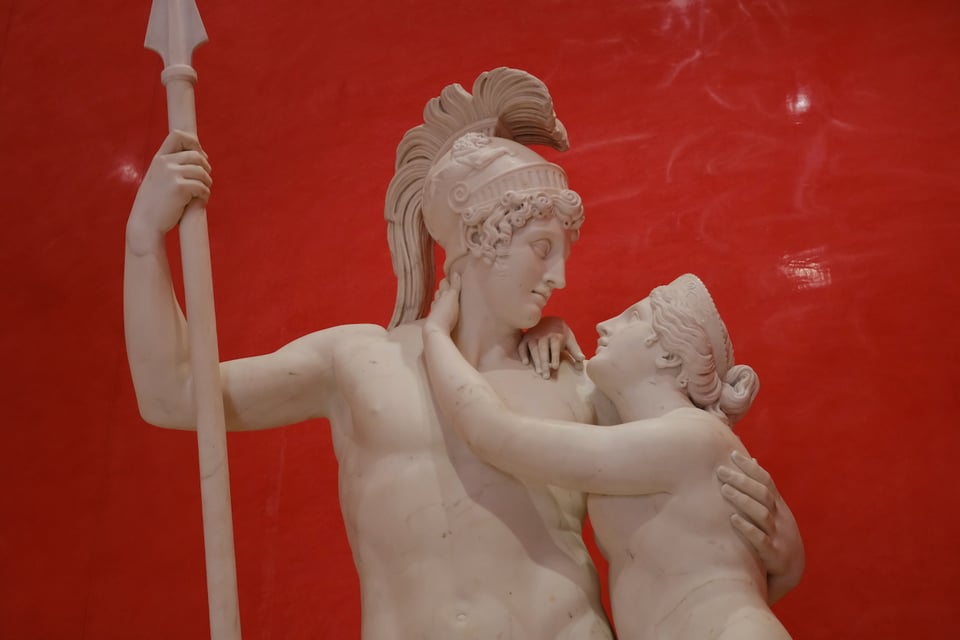
I saw Christopher Nolan’s The Odyssey last night, not on IMAX 70mm, screenings of which have been sold out for weeks, but on as large a screen as I could find. As a big Odyssey-lover since I read Robert Fitzgerald’s translation back in school, and then more recently Emily Wilson’s celebrated version, I was cautiously optimistic. I knew Nolan would do something interesting with it, at least. But would he bring it too down to earth? Would there actually be monsters, or would the Cyclops be some basketball-player-sized guy with an eyepatch?
I am happy to report that there are indeed actual monsters in The Odyssey, and that it hasn’t been “grounded” into mundanity. There are gods, and one of them is played by Zendaya. At the same time, Nolan’s movie is very much of our time, the moral preoccupations of the story re-interpreted and re-filtered through the conscience of a 21st-Century artist. It doesn’t exult in war and conquest, but explores its repercussions in trauma, regret and memory.
This isn’t a knock; mythology draws its power from its adaptability to changing worldviews and values, and attempting to tell the story as an ancient Greek would (as Homer did!) could be at best an exercise in re-enactment. But it left me with a lot to talk about, so I went to my friend Dr. Amanda Cockburn, Professor of Literature at Dawson College, to discuss.
The following conversation contains very minor spoilers for a 3,000-year-old-story.
You know, I think you could make a case that the movie is a very Judeo-Christian take on Homer.
I would agree! Homer’s Odysseus is so much more the arrogant braggart. He was such a penitent in the film—I was a bit disappointed by that, but also understand sticking with the “war=bad” PTSD narrative.
It felt pretty fresh, all things considered. You can’t just straight-up adapt the classics without negotiating the vast difference in our value systems.
Totally. Nobody would sympathize with the hero—he’d be too brutish.
So, making it a story for our times, as every retelling inevitably is—I guess I respect that he did that straight-on rather than trying to wriggle out of it. But you’re not going to ever find an ancient hero who regrets sacking a city. And there was some very conspicuous not showing moments like the murder of the enslaved women of Odysseus’s household.
Yes, that’s a brutal moment, impossible to negotiate in a unified story.
And it’s very Nolan to make the Calypso sequence completely sexless. Did he think the audience wouldn’t stand for an adulterous Odysseus?
He’s supposed to do it with Circe too!
The interpretation of the rules of hospitality, called here “Zeus’s Law,” as basically “do unto others” is very Judeo-Christian as well. It’s really the crux of the entire story. How do you kick out the vile suitors who have been eating your family out of house and home for years without breaking that sacred law and becoming a moral exile?
That line delighted me—it sort of becomes a catch-all for values of hospitality that shaped the era and that are transgressed throughout the whole story. Gift-giving, shelter, food, cleaning clothes—basically good care for other people in a pre-market society.
My mind turns to all the Indigenous people, exiled in Thunder Bay from the forest fires, who are sleeping in their cars because what hotel rooms are left there have been jacked up in price beyond affordability. Zeus’s Law, Thunder Bay.
It reminded me of two things, both Biblical: the angels in disguise in the story of Sodom and Gomorrah, and King David, who can’t build the temple in Jerusalem because of his own sins and must pass along that duty to his son Solomon.
And Athena is like an angel speaking to O’s conscience more than she is, ahem, the goddess of war who loves Odysseues BECAUSE he’s crafty.
Yeah, in the original she actually helps him in his deceits, while in this she does a lot of shaking her head at him.
I feel like Nolan jumped from The Odyssey to the Tennyson poem at the end.
I thought Tom Holland [as Odysseus’s son Telemachus] was quite good. Maybe it’s because I just saw a trailer for his next Spider-Man movie but it felt a bit like a superhero origin story for him.
I liked him, too—he’s supposed be in a coming-of-age moment and Tom Holland has a sweet vulnerability to him. I liked the sense of naivety conveyed by his searching for Athena in the eyes of every second person he meets.
I guess it’s interesting that she’s the only god we actually see incarnated, and it’s just as likely that she’s in Odysseus’s head. At the same time, there are actual monsters in the movie, so it feels like Nolan is splitting the difference a bit. Audiences today are OK with supernatural creatures but maybe less OK with gods? (Another point in the Judeo-Christian column.)
Monsters OK, just not monstrous behaviour in the hero, such as adultery or enjoying a good city-sacking. The gods are the funny part of the story, so very not Nolan.
I also wish he had kept in the part where the cow carcasses moo as a portent while roasting on Helios’s isle.
He did so well with that Circe sequence though and those horrific transformations.
That was the best part, I think. Absolutely visceral, a real fairytale/myth brought onto screen.
I was glad I had finished chewing on my Nerds rope while that was onscreen.
Long ribbons of meat, so gross! And then you wonder who they’re eating.
The movie really asks, how do we relate to these gripping tales when we are consciously growing beyond the values of a masculine warrior culture?
Haha, I speak for me and my kind. What a fool.
The Cyclops’ face was great, the side-eye and misplaced mouth.
He was played by Bill Irwin, a legendary clown and choreographer. He puppeted the rectangular robots in Interstellar.
Oh, super cool.
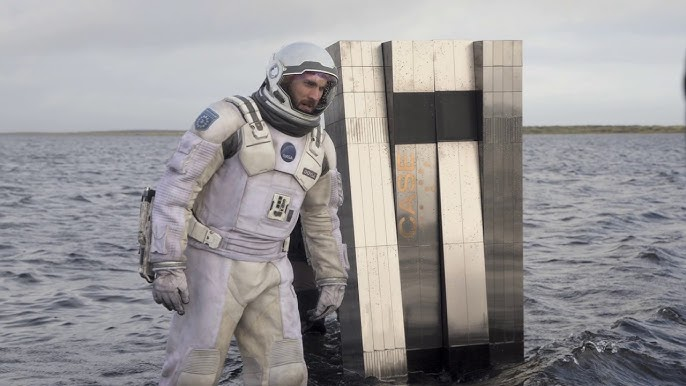
Maybe my favourite performance, actually. Somehow utterly alien and human all at once.
Yeah, haunting. Looked like a gentle toddler chomping on snacks. But also scary?
Definitely the most Greek-god-like in his ruthless violence combined with a weird human tenderness. Takes after his daddy, I guess.
Scylla the rock monster was exactly as I’ve always imagined, whereas the hairlessness of the Cyclops was surprising.
What did you think of the “people from the sea” bits? It felt very obvious where he was going with that but it still worked. Reminded me of John Sayles’s “men with guns,” or the “men from the mountains” in the recent Philip Pullman trilogy The Book of Dust.
Totally predictable, but it worked.
Also a very modern, or post-modern value—there are no good guys, the old morality is entirely relational, the system itself is the real enemy.
Early capitalism is the enemy; it’s not honour that drives Agamemnon, but a desire to control the trade routes dominated by Trojans.
Yes, good shout there. Chivalric honour as nothing but a facade concealing naked greed is very… post-Game of Thrones.
I really loved Benny Safdie’s Agamemnon though, great contrast between his sick armour and those pillowy lips.
Agreed. I regret that they didn’t go with the actual conditions of him sacrificing his daughter, though: he told her she was marrying Achilles and when she showed up to the marriage altar in her finest wedding clothes, they flipped the script on her. The brutality against women in this epic was definitely watered down because it is too much.
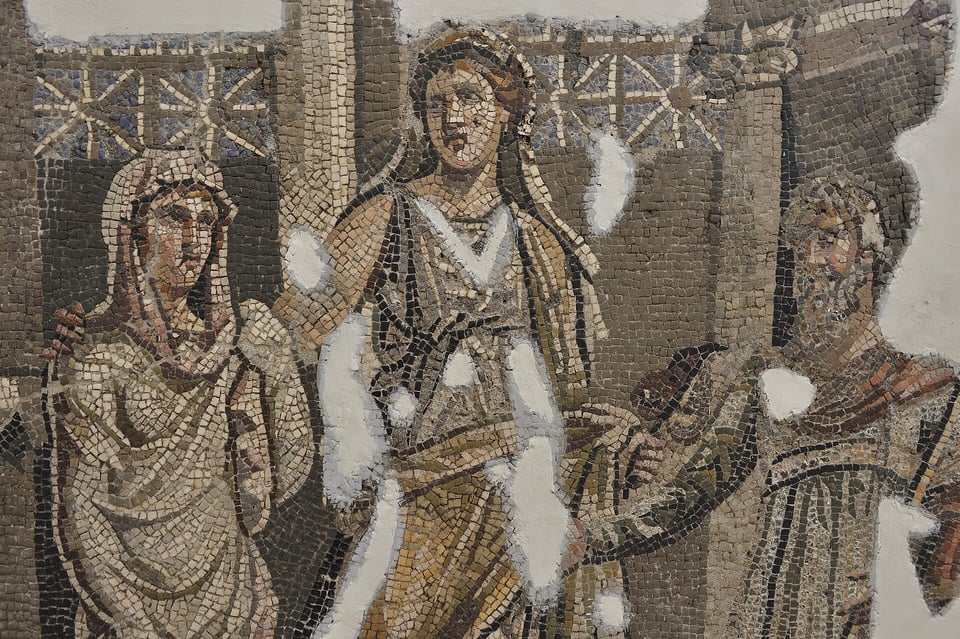
Yeah and it’s all neatly avenged or atoned for.
Odysseus remembers Athena’s head being cut off and that scene sort of stands in for all the violence against women in warfare. She was Agamemnon’s booty. They would rape and keep her as treasure, not behead her. It’s all part of “Zeus’ Law.”
There’s so much to adapt because these ideas of what’s honourable were so effed up. Interesting how Odysseus sees this vision of Athena as a victim of war and not as a divine helper, whereas Telemachus, who has not been warped by war, is always looking for divinity in people.
As Emily Wilson translates—Odysseus is a complicated man.
Bonus track:
You’ve been reading Something Good. What didn’t make it into the conversation: the story of how I lost my AirPods in the movie theater and had to run back in to find them with the help of some intrepid teenage employees. Turns out that AirPods look very much like pieces of popcorn. Still, in the end, much like Odysseus, I prevailed.
If you like what you’ve been reading, do subscribe or do tell a friend. Just do… something!
Subscribe now
Add a comment: