
Something Good #122: Ways of Listening With Rollie Pemberton
"That friction, to me, is the juice of life."


Writer Rollie Pemberton, who is also the musician Cadence Weapon, has appeared in these pages before, where, in the early days of Something Good we talked about the early days of online music culture and the sacred nature of certain MP3s. Rollie is one of my favourite thinkers and writers about music, and his new book Ways of Listening: Building a Deeper Relationship With Music in the Streaming Era asks big questions about art, money and technology.1
How should we listen to music? Where should we find it? What do we owe it? These questions are about more than streaming services; they’re about gentrification, class, race, history… they intersect with everything, because they’re about culture.
On a recent sunny day, Rollie and I sat down on the terrasse of Mile-End café Club Social and tried to talk it all out.
You talk about record stores as places where you go and drink in the atmosphere, experience it, explore, which creates such a different shopping experience than buying online.
The good record stores inherently resist that capitalistic urge. I was just in New York and I went to A-1 Record Shop. To me, it’s the best record store in the world. You go in there and it’s really messy, disorganized, cramped, hard to navigate. I’m trying to get into the disco section and there’s stuff all over the place. I have to move things around. It’s very physical.
To an outside observer it just looks like a bunch of junk. You’d think the records are going to be in terrible shape too. But then you spend some time there. You have to take a deep breath and be like, Okay. Just calm down, just take your time. You’re going to find something. And then you start finding grail after grail after grail once you’ve passed the test. It’s almost intentionally designed to filter out people who don’t have that impulse.
Good bookstores are like that too.
And then you pull the record out of the sleeve. The sleeve is all dinged up and dusty. You pull out the record and it’s pristine. So they must be doing it on purpose.
I don’t want to get too “things used to be better” about this. But I do think there’s something to be said for having to work for it a little bit.
That friction, to me, is the juice of life.
Compared to streaming, even downloading MP3s had friction. Going through somebody’s Soulseek collection.
Oh, yeah. Not only going through somebody’s collection, but then making sure the file was actually correct. I remember when The Eminem Show was coming out and everyone was trying to download leaks. You’d download one and it’d be a ten-second clip, or the wrong song, or some fake. It was like a shell game. Or people would rename their own stuff just so people would download it.
Do you remember when De La Soul finally put their catalogue online? I downloaded it and realized all the files still had scene tags.2 They’d basically just taken the pirated files that had been circulating and re-distributed them. I remember thinking, This is such an incredible moment.
Then there were these legendary torrent sites like OiNK, where you had to maintain your upload/download ratio. There was this weird honour among thieves.
I was stressed out when I had those accounts.
Totally.
It was probably the most frequent flow of new music I ever had. And then it was like, Okay, you’ve got to contribute. You’ve got to be a good neighbour.
Right. It’s like, we’re all criminals here.
It’s like a commune or something.
A pirate colony.
You’re doing the dishes. You’re doing the laundry.
Respect the rules. We’re all in this together against the big guys.
And make sure you pirate something today. You better pirate something or you’re out of here!
I used to think about the people who got busted and went to jail for ripping or sharing stuff. Nobody was getting paid for doing this. There wasn’t really a financial incentive. But the community itself offered an incentive.
Some people just wanted to be pioneers. They were just like, I ripped that. Some of the people worked at CD factories. Did you ever read How Music Got Free, by Stephen Witt? Really cool book. A really interesting story about all those piracy groups, how they started, and interviews with the people in them.
A lot of them were working at the CD factory, like the Polydor factory, and they’d steal discs off the conveyor belt. And that’s where they were getting the leaks!

I want to talk a little about the idea of cheap rent, because it’s a thing I’ve thought about a lot, and something you’ve talked about in your newsletter. Do you know Brett Story, the filmmaker and writer?
I do, actually. I met with her about working together.
She wrote a great article, “My First Film Teacher Was a City,” about cheap rents in Montreal in the early 2000s and how they let her do anything she wanted to do.3
In the past, pretty much any time you could find groups of people doing something together creatively, it’s because there was cheap rent. I often think about the Brian Eno idea of “scenius versus genius.”
I was going to say, this is very scenius.
People create things and you can’t really attribute it to one person. Inspiration is like a ghost, or an angel, that jumps from one person to another. But it all kind of exists because the rent is cheap.
I agree. I feel like the times when I’ve been around really strong scenes, there was always cheap rent involved. Even early on, when I was in Edmonton, it wasn’t expensive to live on your own. I lived with other artists and it was cool.
But Montreal especially, having cheap rent…
Just having a big room to do shit.
And being able to have it be consistent.
Yes. And not having that worry of being kicked out. Or, if you were kicked out, knowing you’d land somewhere else.
Yeah. It was like we were just moving to another friend’s house.
The thing is, there’s nowhere cheap anymore. There’s a subreddit, r/howislivingthere, that I’m kind of obsessed with. It’s just people talking about where they live. And everywhere, it’s the same story: rents have gone up like crazy. Nobody can afford it. Small towns, big cities, whatever. There’s nowhere left. Everyone everywhere is saying the same thing.
But don’t you notice that there’s been less transcendent art as well? I would say, just anecdotally speaking, I haven’t encountered something that really rocked my world as when I lived here. I’m watching Grimes make music for the first time. I’m watching Mac DeMarco come into his own. I’m watching all this stuff that didn’t even blow up yet, but was still like, Whoa. This is the craziest thing I’ve ever seen. Dishwasher! There isn’t much of that anymore.
People talk about places, but not the way they used to. Nobody’s saying, I’ve got to get to Berlin, or I’ve got to get to… anywhere, really.
There’s been a real homogenization of cities. Back in the day, you could look at the Vice Guide to Cities or whatever, and everybody dressed differently. You’d think, Oh, the people in Helsinki totally look different from the people in Montreal.
Now it’s too easy to see what they’re doing in Helsinki.
Not only that, but then you look and they’re dressed like people in Montreal.
When it took more effort to see what was happening somewhere else, there was value in ideas travelling slowly rather than quickly.
If you were really into Japan, you’d have to get all these weird little magazines. You’d be mail-ordering some selvedge denim from the one guy in North America who had it.
The thing is, the no-cheap-rent thing is also true online. Almost no one has their own place on the internet anymore. We’re all on these platforms. They’re nominally free, but there’s always a price. Maybe financially. Maybe ethically. Or you have to pay a lot of money to stake out your own place on the internet—to pay server costs and do all that stuff. There’s no equivalent of those weird lofts online anymore.
Well, even literally, there are virtual communities where you can pay virtual rent. That’s a real thing!
There are communities on Discord and things like that. But they’re on Discord. They live at Discord’s pleasure. And if Discord decides, like they did recently, that everybody has to upload their government ID, then you’re screwed. Your community gets renovicted out from under you by Discord or Facebook or Instagram or whatever.
I used to be really into message boards.
Me too. Those were the best. Stillepost was part of Montreal. It was an extension of Montreal. It wasn’t the “Montreal Scene Facebook Page.”
We had something similar. We read Stillepost too, but ours was called In Decline. It was more hardcore music—emo, that kind of thing. That’s where you found out what was happening in the local scene. The thing about it was that you didn’t have to pay. You weren’t seeing ads. There wasn’t any monetization at all. It was purely a community. And that kind of doesn’t happen anymore. It’s really hard to find. Even on Reddit, there are ads.
It’s like being in Manhattan, like you’re constantly in a mall.
It’s like being in Times Square, every time you’re online.
Subscribe nowWays of Listening: Building a Deeper Relationship With Music in the Streaming Era is available now, as is the new Cadence Weapon album Forager. This is one piece of our conversation; the other will be published in the Cadence Weapon newsletter.
Bonus track:
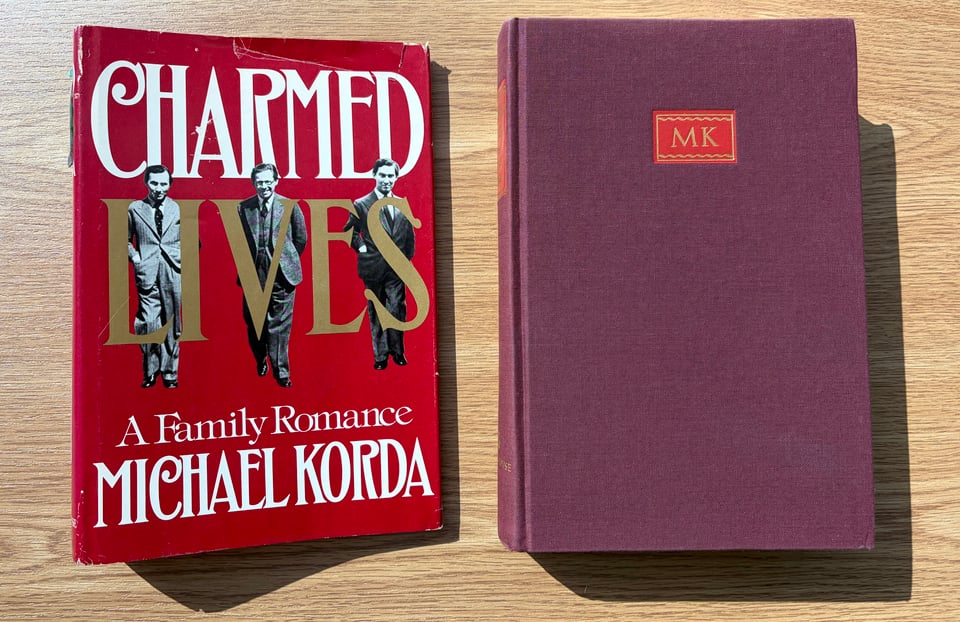
This week’s #nojacketsrequired was found in the tiny bookshop in the back of the Atwater Library (one of my favourite places in the city, open 12pm-3pm Wed-Sat, check it out if you’re in the neighbourhood). Not gonna lie, I like the dust jacket, but it was rewarding to find the embossed initials beneath. As usual, send me your discoveries.
This is Something Good. There are changes afoot around here. Things I can’t talk about yet. Things I’ll talk about soon. If you want to be the first to know, and you don’t subscribe already, then do it below:
Subscribe now
Full disclosure, there’s a chapter in which Rollie goes deep on my project Sad YouTube. ↩
Used to identify which group of pirates had first ripped and released the music online. ↩
Also worth looking at: Josh Kline’s article “New York Real Estate and the Ruin of American Art,” in October magazine. ↩
Add a comment: