
Something Good #127: Only a Fool Never Catches a Cold
A gentle limbo of fuzzy-headedness.


Whenever I get a cold, it follows the exact same three-to-five-day itinerary: weird feeling in my mouth → sneezing → LOTS of sneezing → weird feeling in my chest → coughing, dryly → coughing, wetly → feel tired for one day → better. That first anticipatory mouth-feel can bring on a variety of feelings. Apprehension, yes, but sometimes, a secret gleeful anticipation.
In university, I took an amazing course called Medical Anthropology, where I first heard the Japanese saying, “Only a fool never catches a cold.” The idea being that it is natural, even beneficial, to sometimes allow your body to just be sick for a little while, to slow down, to treat yourself gently.1 It can be nice to be sick, is the idea here, if you let yourself. Just as exercise tires my brain out so that it doesn’t have the energy to get worked up about stuff, mild illness exempts me from earthly cares for a brief hiatus.
Now, while I do like this idea a lot, I have found that for the most part it doesn’t really hold, as the physical and mental discomforts of illness usually outweigh the benefits of enforced relaxation. But this week, for whatever reason, I’ve allowed myself to float in a gentle limbo of fuzzy-headedness, reading, occasionally writing, and playing a bunch of indie video games, as I’m once again judging for the Independent Games Festival.
With the addition of audiobooks to my reading diet, I now have something like three to four books on the go at any given time. This week I finished P.D. James’s Death of an Expert Witness (good stuff, though in my haze I did have to jump back a few times to keep the characters straight), and not one, but two books about people trapped in Nazi Germany: Alan Furst’s Dark Star and Daniel Kehlman’s The Director. Furst’s books are dadlit of the highest order; they’re all set between 1933 and 1945, and they all seem to feature a haunted, morally compromised hero lurking in the darkest corners of Europe in its darkest hours. This one is about a Pravda reporter and reluctant NKVD agent caught between Nazi counterintelligence and Stalin’s purges, but you could replace the reporter with a Polish officer in the resistance, a French movie producer in the resistance, a Hungarian ad man who spies for the resistance, etc., depending on which one you pick. If any of those scenarios appeal to you, you will like his books.
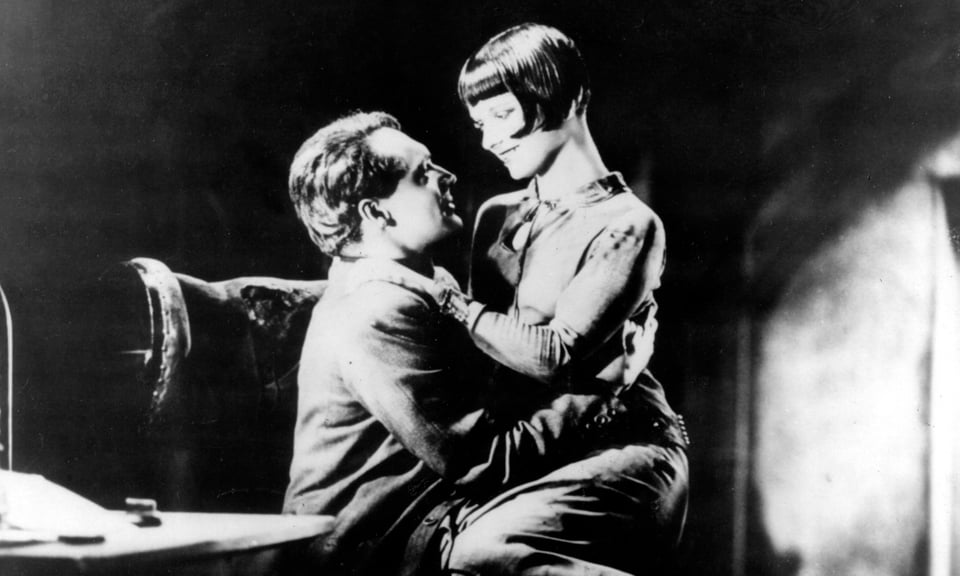
The Director is a historical novel about the great film director G.W. Pabst, best-known probably for his Louise-Brooks-starring Pandora’s Box (1929), who fled the country for Hollywood like his fellow Austrians Fritz Lang and Otto Preminger in the 1930s. But unlike his compatriots, he met with little success and returned to his home country after Hitler had annexed it and found himself unable to leave, suborned into making films for the Third Reich. (There are a few incredible moments where, on the train back to Austria, he encounters people fleeing the country, utterly dumbfounded that he’s going the wrong way.) Based loosely on Pabst’s life and his lost 1945 film The Molander Case, this is a dreamlike novel of slowly simmering absurdity and horror.
Over in the world of indie games, I’m seeing a lot of interesting deduction/puzzle games this year, undoubtedly prompted the success of titles like Chants of Sennaar (which I’ve already written about), Return of the Obra Dinn, The Roottrees Are Dead, etc. If you’ve never heard of any of these games, don’t worry, you are a normal person, but the basic idea is that these games present you with a bunch of information that you use to unlock more information in a very satisfying intellectual loop. You could be talking to people whose language you only understand a few words of, rooting through old websites, or sorting through a WWII dossier, but there’s always some central mystery to unlock that involves cross-referencing and leaps of logic.
Does that sound fun, or does that sound terrible? If the former, a few IGF entries on my radar, both of which area available now in various places, are worth your time. Last year I played an excellent text-only game called Type Help, in which you’re trying to solve a country-house mystery using transcripts of audio recordings, gradually figuring who’s talking to who and in what room they’re doing that talking. This year, the game has been “re-imagined” as The Incident at Galley House, a fully graphical/audio experience with essentially the same story and premise, except more richly interactable, by the way of a cool, entirely fictional “spectronoetic” machine that can play back conversations, seance-style, if you feed it the right information. Manipulating this in-game machine to figure out what exactly went on in this spooky old house is incredibly satisfying, and it’s one of the most interesting “adaptations” of an already-existing game I’ve ever played.
I also got sucked into TR-49, another game about interacting with a science-fictional information machine, except in this case is a WWII-era codebreaker that has been fiddled with to create a sort of superintelligence capable of manipulating reality. By figuring out the right codes and punching them into the device, you gradually reveal its archive of documents, many of them extensively commented on by the device’s users over the decades, and an intriguing mystery unfolds. Again—if this sounds like your kinda thing, check it out.
These games provide the very pleasant feeling of observing your mind at a slight remove as it solves a problem, especially when you are too weary to solve any real ones.

In 2014 I appeared onstage in Brooklyn at IRL Club, a speaking series where people who did stuff online talked about their projects in real life. I was there to talk about Sad YouTube, and one of my co-presenters that night was an artist and designer named Cat Frazier, who spoke about her acclaimed Animated Text blog on Tumblr, on which she posted her 3D-spinning GIF renditions of phrases like the above “lol nothing matters” in a sort of vivid, recent-retro style that seemed to both celebrate a vintage internet aesthetic while creating something new, a style that still feels fresh and direct today.
I remember her talking about how she used used an ancient software dating back to 1981 to make her GIFs, a practice I still find admirable, like forging a traditional Japanese steel sword in an ancient tatara clay oven.
I was heartbroken to learn this week that Cat passed away recently at the age of 35. I learned this sad news from Brian Feldman’s appreciation of her work, “Why Cat Frazier matters”, in which he observes that, according to Giphy, her GIFs have been viewed more than 50.3 billion times. She, and her work, will be remembered.

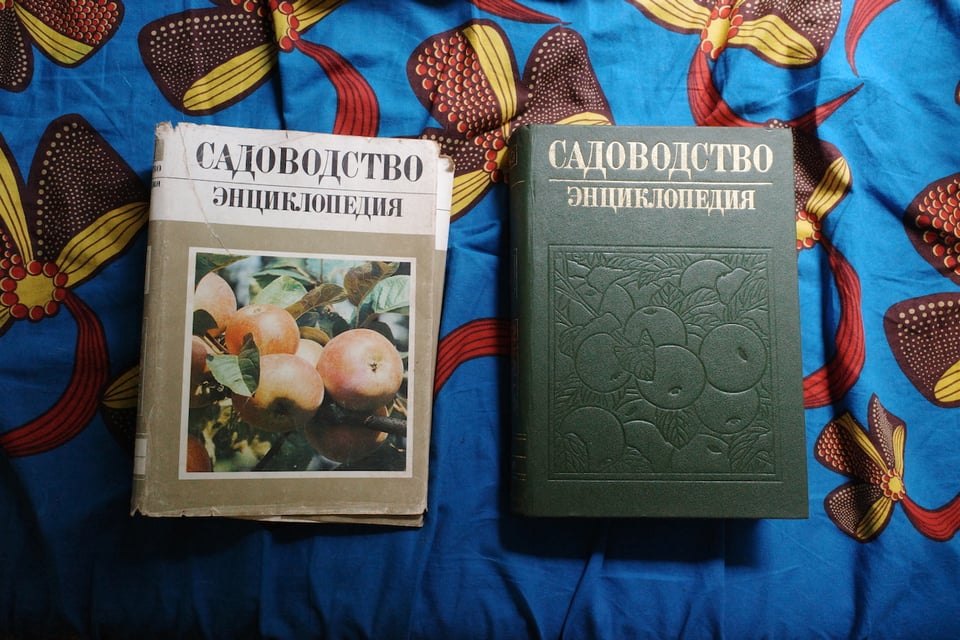
This week’s #nojacketsrequired was discovered in a friend’s farmhouse. As always, send me your own apple-ripe finds.
Bonus track:
I have a cold but I’m still here and I’m feeling better and this has been Something Good. If you like what you read here, please tell a friend or subscribe below:
Subscribe now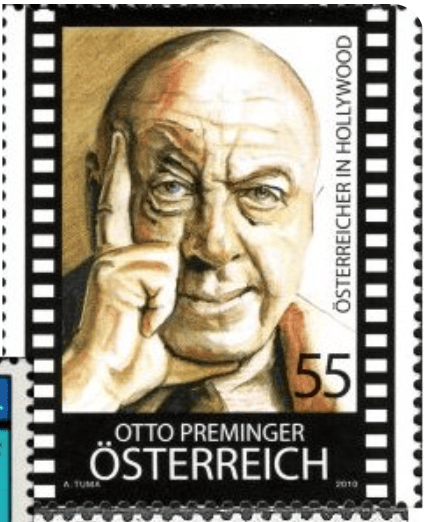
Weirdly, there isn’t much evidence of this saying anywhere on the English-speaking internet, save for a few references to the book East Asian Medicine in Urban Japan, one of the textbooks for the course in question, written by its professor, Margaret M. Lock. ↩
Add a comment: