Something Good #124: Summer Hours
"One is beguiled by the quick finder-viewing and operation, and by the very questionable inclination to make many pictures with the hope that some will be good.”

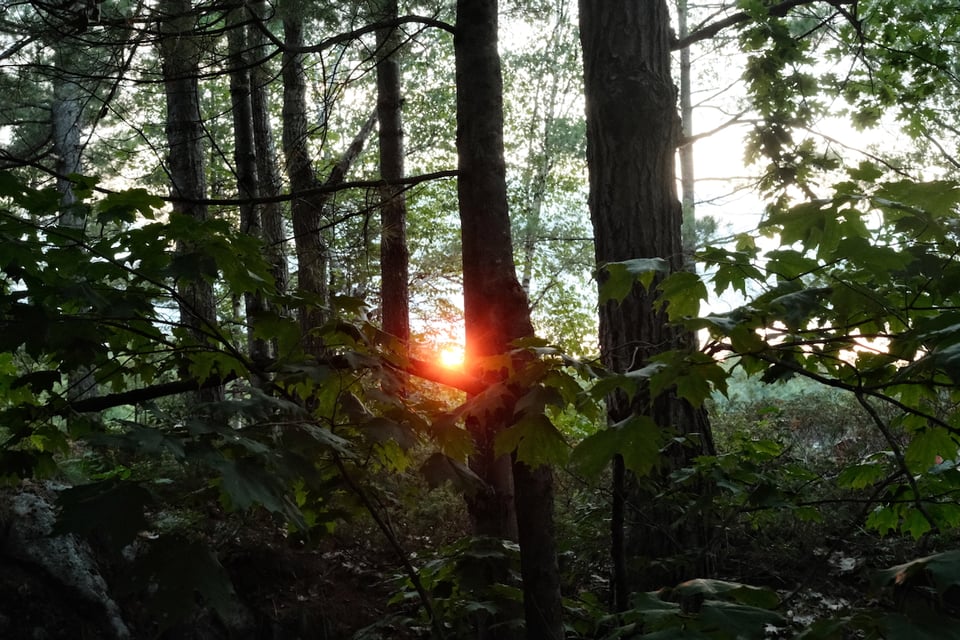
It has been a… summer. Please insert your own adjective in the ellipsis, as I’m not sure which suits me best yet. Lots of change, lots of uncertainty. I’ll have more to say in the coming weeks, but for now, here are some obsessions and preoccupations I can safely share.
I was recently contacted by a French game designer by the name of Lucas Cimon. Lucas surprised me with a link to Abducted Negotiators (French version: Abductés), an indie tabletop role-playing game inspired by my short film Final Offer, which you can watch above. In his words:
I built the scenario, which is quite simple, to create a sharp shift in atmosphere between the introductory phase and the main scene: following a few scenes introducing the characters, where supernatural abductions take place in a more or less stereotypical horror style, everything changes when the players realize the terrible stakes of their situation. Instead of veering into body horror or slasher territory, as one might expect from a horror game, the scenario evolves into a tense negotiation and a race against time.
The original film is essentially about a negotiation; I think this is a really smart choice for a game adaptation, as it’s natural to translate that kind of adversarial into a role-playing scenario. And while I haven’t had a chance to play it yet, I’ve read through the rules booklet and I think it looks pretty cool. (Might try and get the original actors together to stream it sometime.) It’s available in PDF form on itch.io at this link for the low price of three Euros.
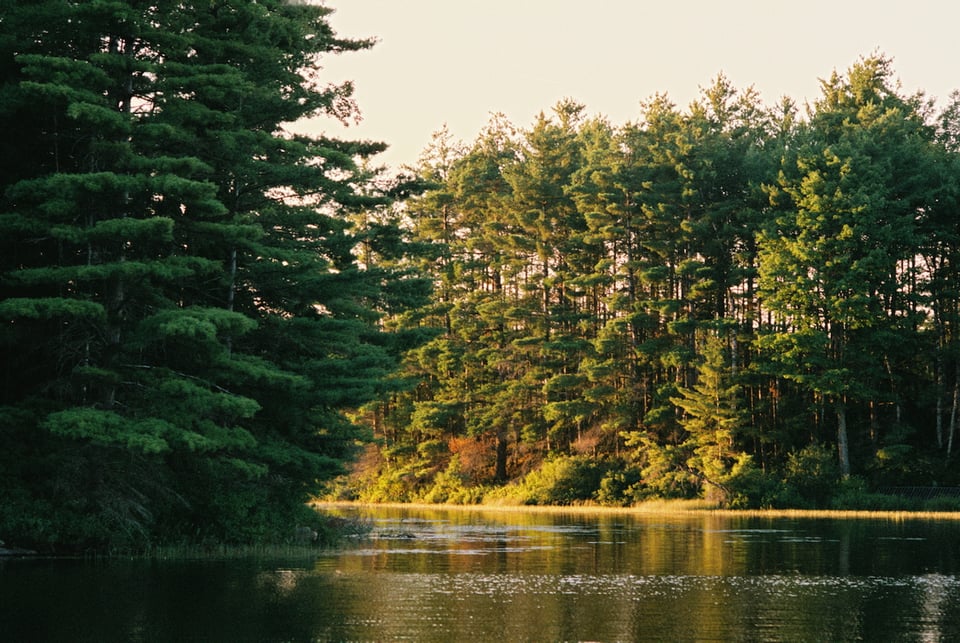
I’m still fixated on film photography, and here I have two recommendations, neither of which are going to be particularly accessible but which I’m going to put here anyway. The first is Fujifilm Superia X-Tra 400. This is a 35mm film stock introduced in 2003, in the twilight of the film era. It’s a particularly gorgeous emulsion, fine-grained with those emerald Fuji greens, perfect for shooting summery things like trees and grass. It probably sold in the billions; you could pick it up cheap at Wal-Mart.
Unfortunately, Fuji discontinued the line in 2024, and now you have to hunt for it. I hit the jackpot and found about a dozen rolls of only gently expired Superia 400 earlier this summer from an online retailer and now I will ration them out like the six cans of Orange Slice soda1 I brought home from New England one summer long ago. It really produces gorgeous images If you stumble across some, snap it up and either use it yourself (I’d suggest you shoot it at ISO 200 to account for the fact that it’s probably expired, but also just because it loves light) or get in touch with me. (Also, don’t be fooled by the film they’re selling as just “Fuji 400” these days, which is actually made by Kodak and is probably the same as Kodak UltraMax 400, a fine—but different—stock.)
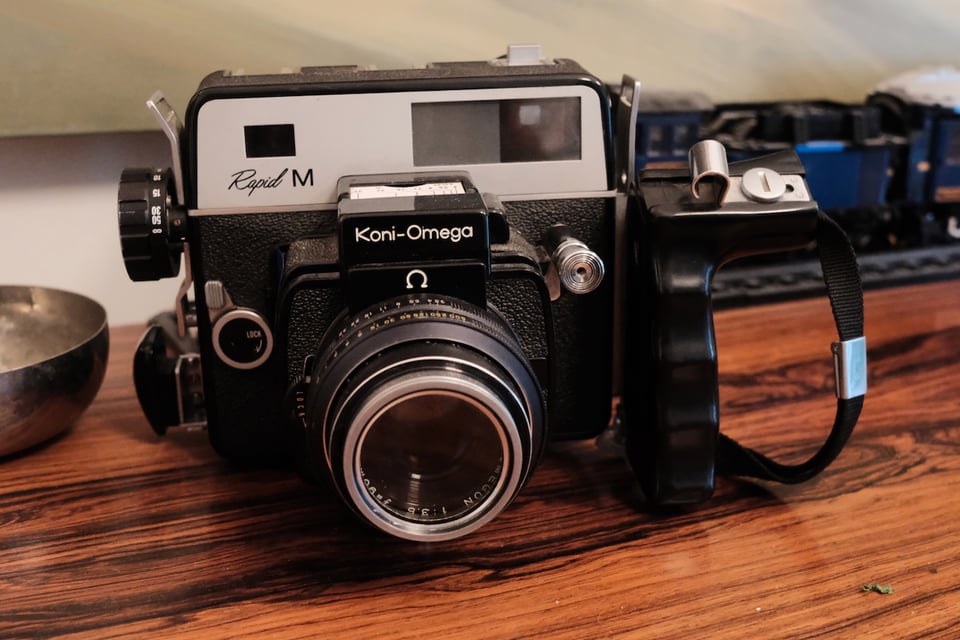
A few years ago, I was gifted a Koni-Omega Rapid M by my wife’s grandmother Betty, herself a prolific photographer. I didn’t know what to do with this bulky beast of a camera. I had never shot medium-format film before, and I had no idea where to start. But I liked the way it looked, so I just let it sit on a bookshelf and (literally) gather dust.
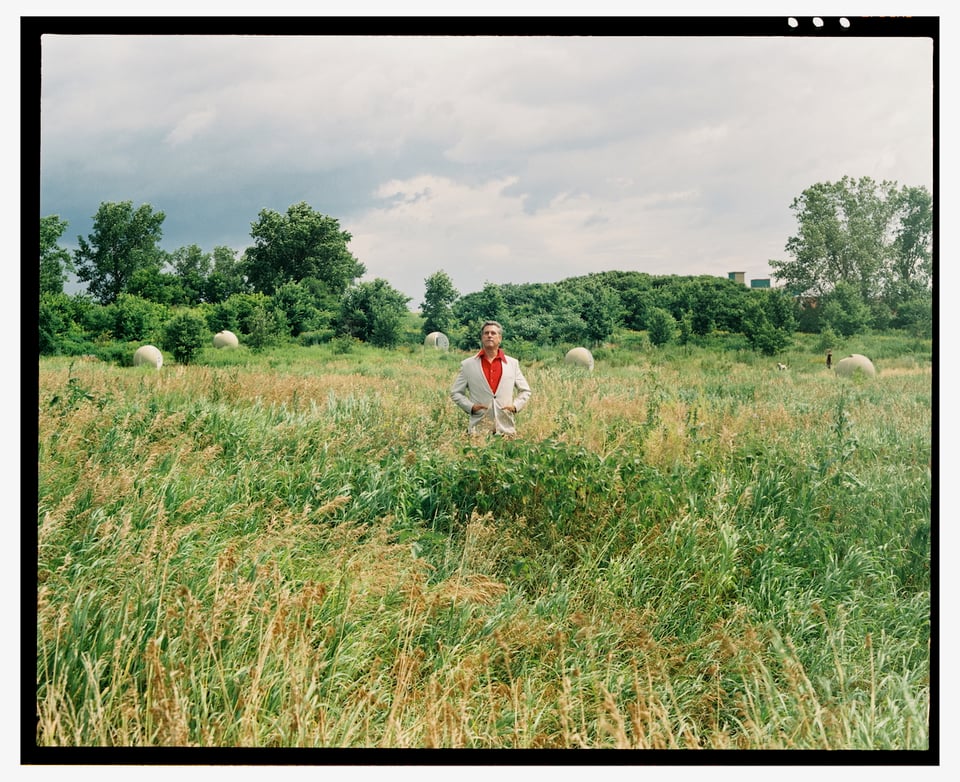
Well, earlier this year, hungry for another financially ruinous hobby, I got it into my head to learn how to use the thing. 120-format film is still being produced in relative abundance, and it’s capable of producing images of startling clarity and uniquely shallow depth of field, a product of the huge 6×7 negatives, larger than IMAX frames. It took some online research (thank you, gentle-voiced camera YouTuber David Hancock and camera-manual-librarian-of-Alexandria Mike Butkus) but I figured out how to load and operate this 60-year-old device.
It’s entirely mechanical, no electricity required, which means I need to use an external light meter (in my case, an iPhone app), and as the rangefinder is wildly out of calibration, I use a tape measure to calculate my distance from the subject and dial in the focus manually. There’s pretty much no way to hand-hold it, a tripod is absolutely required. To advance the film and cock the shutter, you pull out this metal plunger and push it back in with a satisfying ka-chunk, almost like a ending a line on a typewriter. It is a huge hassle, and I love it. The square-ish exposures look like nothing else. Each shot takes time, there are no candids here. And with only 10 shots to a roll, every one counts.
There’s a great moment in Ansel Adams’ book Examples: The Making of 40 Photographs where he talks about encountering Alfred Stieglitz in 1935 and snapping a shot of the other famous photographer with a then-new 35mm camera he has on hand with him. The two, accustomed to one-shot-at-a-time, large-format sheet film cameras, scrutinize this innovative photographic device, and marvel at the number of frames now easily available. “The technique of 35mm photography appears simple,” Adams writes, “yet it becomes very difficult and exacting at the highest levels. One is beguiled by the quick finder-viewing and operation, and by the very questionable inclination to make many pictures with the hope that some will be good.”
Reading this, I couldn’t help thinking about how constraining it felt to be shooting 35mm film, with its mere 36 exposures per role, compared to the near-infinite number of frames I could take with a digital camera. It was fascinating to realize that to earlier photographers, the 35mm camera offered an almost unimaginable freedom. I seem to be going back in time, shrinking down from thousands of exposures to a memory card to 36 to a roll to now only 10 on a roll of 120 film. (And even that, to a sheet-film photographer, might seem luxurious.)
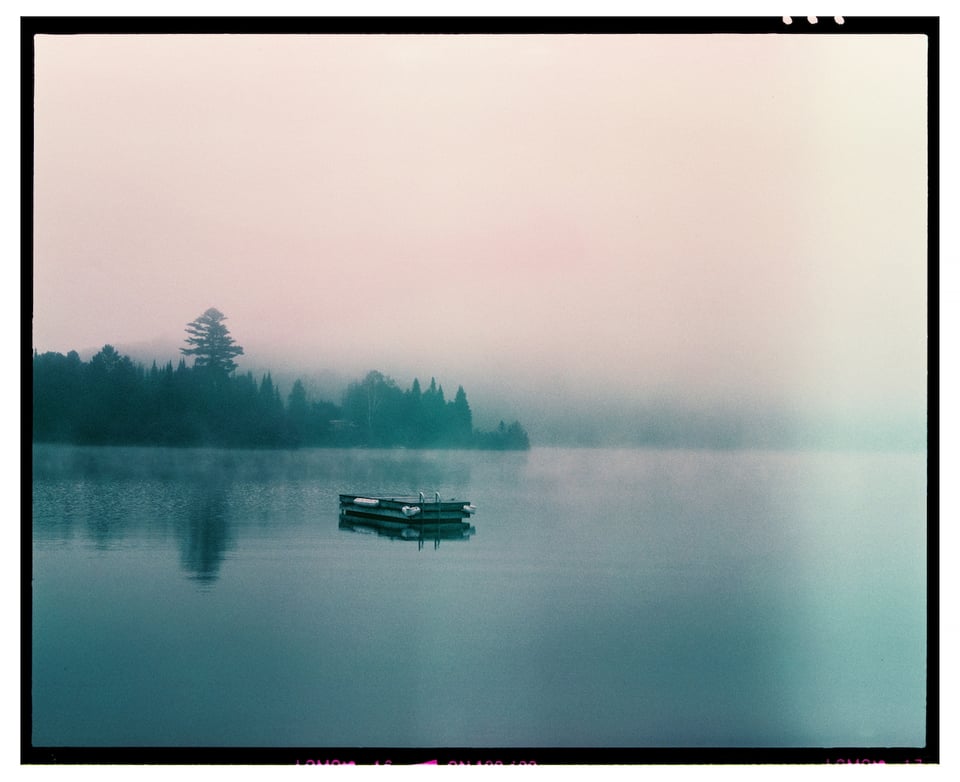
Advice needed: It is happening: we’re going to Japan in November. We will be going for a little more than two weeks, flying in and out of Tokyo. All other plans are relatively elastic, although we will likely be going through Hakone, Kyoto, Osaka. But, to those who live or have travelled there, I would love to hear your suggestions for pretty much anything, regardless of scale. (You probably have a sense of what I like if you read this newsletter, and even if you don’t… what do you like?)
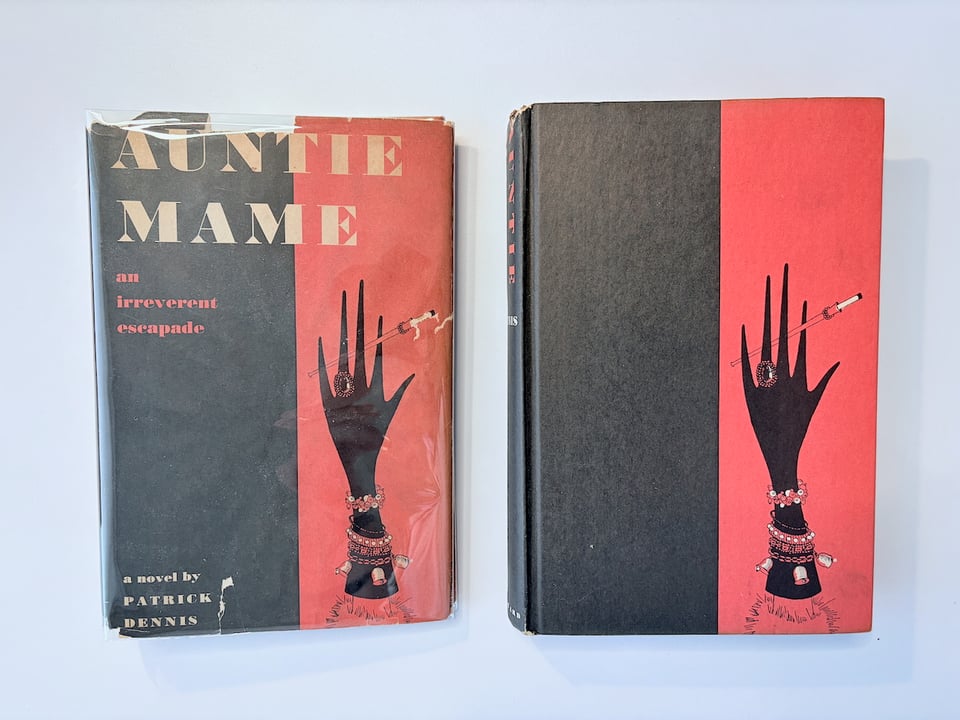
Thank you friend of the newsletter, filmmaker Trevor Anderson, for letting me photograph this week’s #nojacketsrequired, a sterling example of a book cover that looks so much better than its scraggly jacket. Find any on your travels? You know where to send it.
Bonus track:
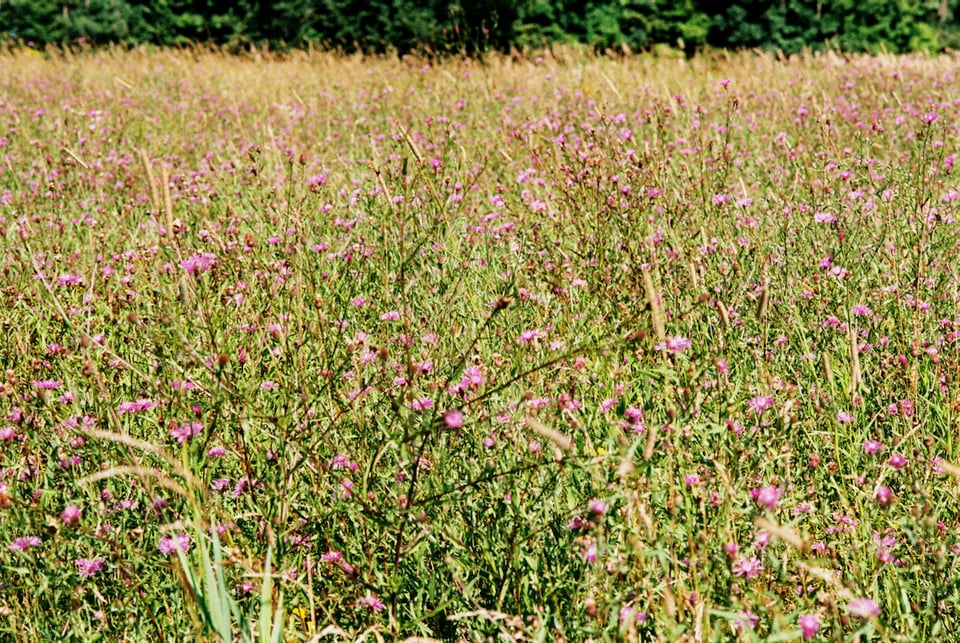
Thanks to writer Jack Sheehan for his mention of Sad YouTube in The Irish Times. Thank you for reading and looking. I was going to write about everything I’ve been reading but I ran out of space. If you want to know more, and you don’t subscribe, you can do it below. Or you can tell a friend. You can do whatsoever you like.
Subscribe now
To my adolescent mind, the finest of orange sodas. I see now that it’s been re-launched as some sort of “gut-healthy” beverage, featuring, “All The ‘Biotics’—Pre, Pro and Post.” ↩
-
That is a GREAT cover of I Wanna Be Adored.
I enjoy the photography recommendations too even though that's not my world, it's just fun to catch some second-hand knowledge and enthusiasm.
-

Thanks Gabe—I also really enjoy just watching people be enthusiastic about something even if I otherwise have no interest in it myself!
-
love the pictures; 10 shots at a time would drive me up the wall, and i always admire people who agree with me entirely but enjoy that part of it.
i'll try and keep my japan recommendations focused (i was only there for two weeks myself, but...!)
...a boat (or cycle ride) to shikoku is a very welcome change from the busiest cities, where it really is a bit overwhelming right now. takamatsu has ritsurin garden, the noguchi museum, and udon (honkaku teuchi moriya was my spot), matsuyama has onsen, probably the least packed of japan's very few intact non-rebuilt castles, and a tiny free garden (koshin-an) where they'll give anyone who stops by a very good cup of tea. both have endearing tiny tram systems and people who are still excited to see foreigners, even ones with language skills as limited as mine.
there's lots of good stuff in kansai but it can easily get to be too much. the northern outskirts of kyoto are super green, and a train up to ruriko-in temple in the hills / a walk round the kyoto international conference centre and takaraga pond was the most relaxed i felt in the days i was there. uji is also a good town for aimless exploration and peeking into temples. osaka is much more of a practical city and has kinda outsourced a lot of its culture to kyoto, but sawa near abeno station is an izakaya so good i would absolutely not recommend it in any more of a public forum than this. i love that guy and his chankonabe too much to pack that place as much as he deserves.
tokyo you can pretty much do anything, it's much easier to avoid the crowds. it is frankly a bit of a slog but my number one recommendation is to take the train out west into the hills; the mitake gorge is the prettiest thing i saw and you can pop into the gyokudo art museum for a very obscure bit of interwar painting / a proper zen rock garden where nobody'll disturb any reading time. there's also the extinct media museum, which has signs encouraging you to touch it all and a basement full of reading material they're really desperate for you to get your hands on, though the sight of eg the original iphone made me feel Very old. harukor ainu restaurant, the meguro parasite museum (and curry at tenmai kangaechu opposite), walking through ikebukuro at night...
...i figured i'd throw a lot of my darts at the wall and let you decide what sounds interesting, ehe
-
Thanks Eve this is amazing! So much here that wasn't on my list at all and that I really must see now... like the extinct media museum (!), the parasite museum (!!) etc. Really want to see Ruriko-In but it will be the height of the foliage season and the only way in is via a lottery that you need to enter via return postcard. It used to be bookable online but they changed it and I 100% respect how difficult they made it.
And yes honestly 10 shots... it's really not very much, would be impossible as a walking-around camera but for setups... a little better. I would love to get my hands on a Mamiya 645 or other similar MF camera with a luxurious 15-shot capacity.
-
Great to hear about Japan!
There's a November sumo tournament, but it's in Fukuoka, which may be a bit far. I would highly recommend seeing sumo in-person because ... you probably can't anywhere else in the world! I caught some of the May tournament in Tokyo back in 2010.
The Studio Ghibli Museum, near Tokyo, is of course wonderful, but you would need to check availability and book in advance. The website suggests it's closed for more than half of November, so that's probably a no-go, but I don't know your travel dates: https://www.ghibli-museum.jp/en/tickets/#calendar
Speaking of advance booking, I assume you're planning to travel by train and I believe the Japan Rail (JR) Pass still needs to be ordered beforehand and has special pricing for foreign tourists. It's not a must, but it generally saves money (and is more convenient) compared to buying each ticket as needed.
-
Yes I'd love to see sumo but don't think we're going to make it. We will prob do Ghibli Park instead of the Ghibli Museum as it seems more kid-friendly and tix to the museum sound near-impossible to get! Per the train, the days of cheap passes are apparently over and it makes more sense to do it à la carte.
Reply: